Writing · 2020
Design to Scale
A design-ops initiative to scale our design process across a growing team — closing the gap between an underused pattern library and the developers who needed it every day.

The Challenge
I was tasked with finding ways to optimize the design process. Though the prompt was ambiguous at first, it became clearer as I asked the following core questions:
“How can we maintain design consistency across multiple products?”
“How do we account for a growing team and onboarding?”
“If a new team member walked in today, how can we transfer our design knowledge efficiently?”
The core questions
Survey & Key Takeaways
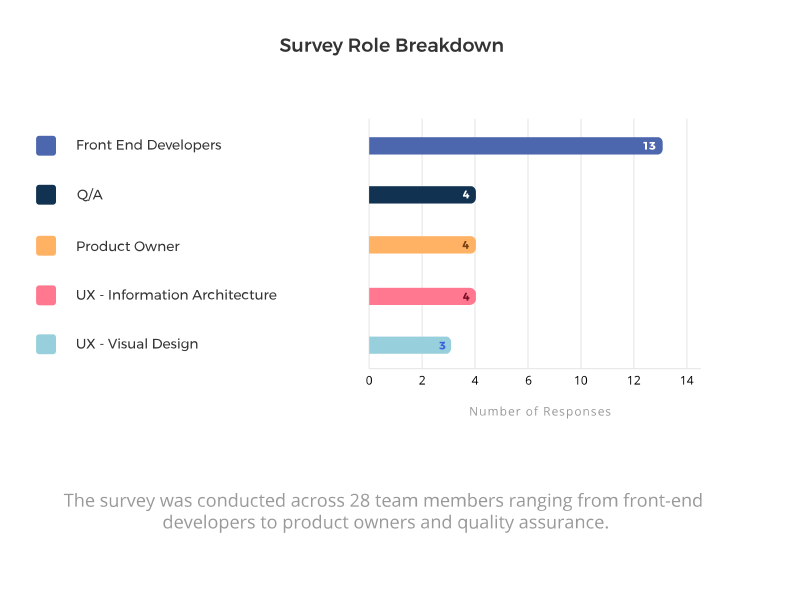
I felt it would be helpful to send out a survey to developers and some key stakeholders to gather sentiments about our design process across the company. This was conducted out of ~28 people, a majority of them being front-end developers, followed by some information architects, and Q/A.
Key Takeaways
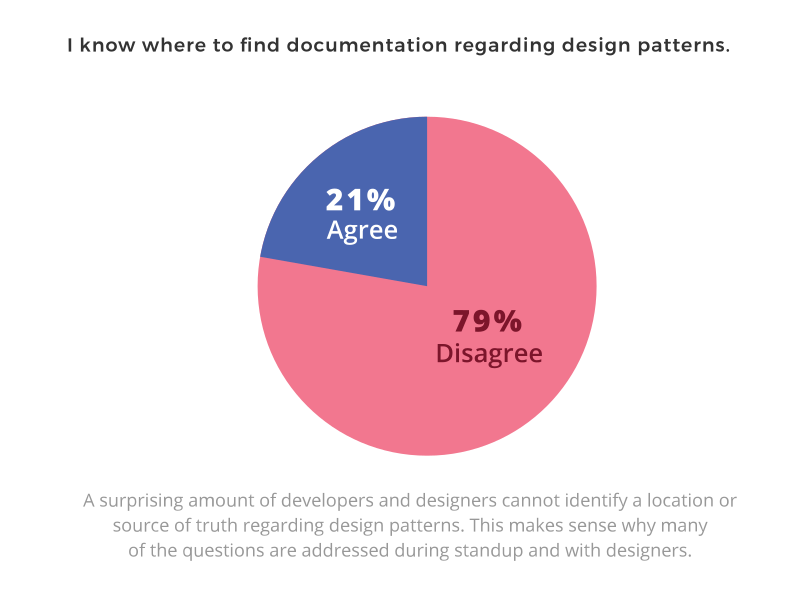
- A majority of people did not know where to find the pattern library or didn’t know it existed.
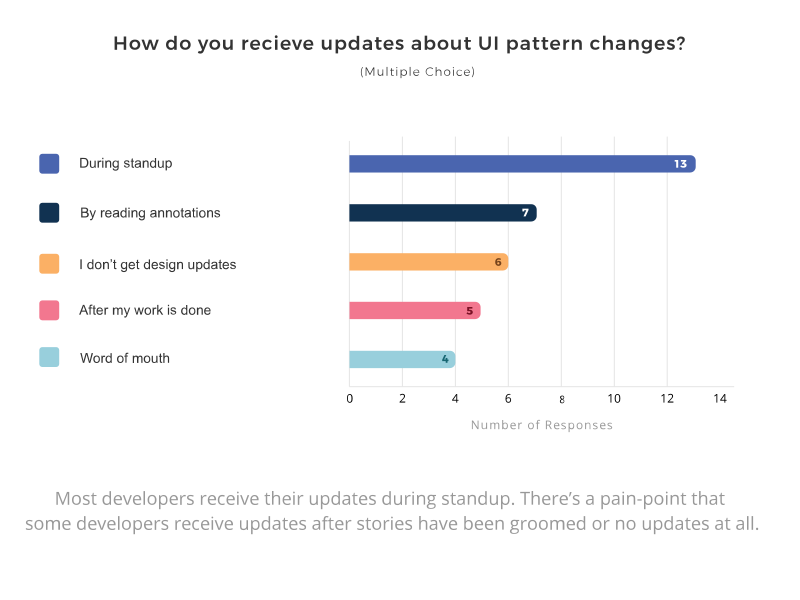
- The library was out of date, and so they trusted the information provided at standup.
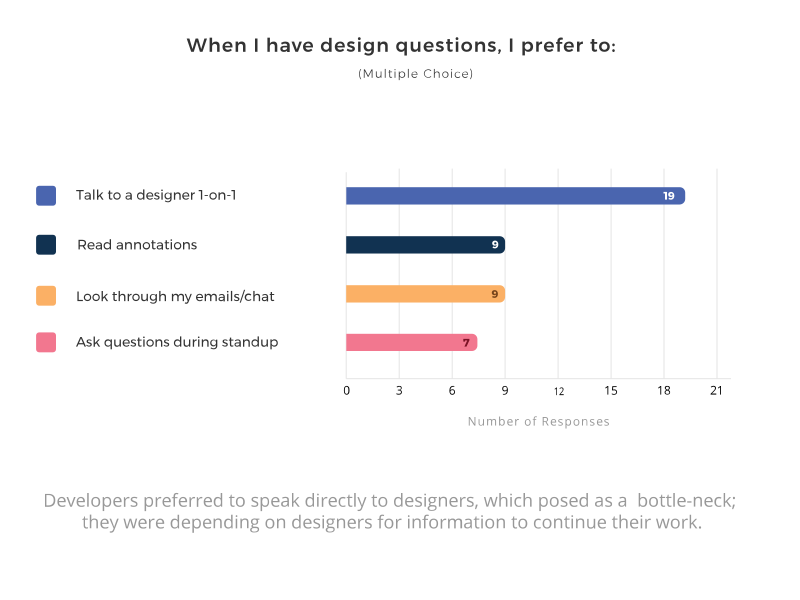
- Many developers still prefer to speak with a designer with design-related inquiries.
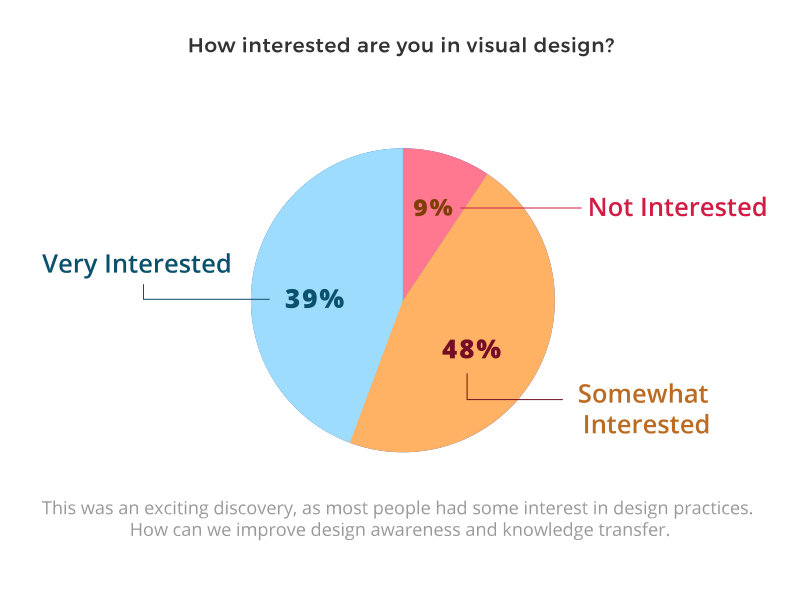
- Most people had some level of interest in design regardless of their role or involvement with designers.
Survey findings
Previous Design Process
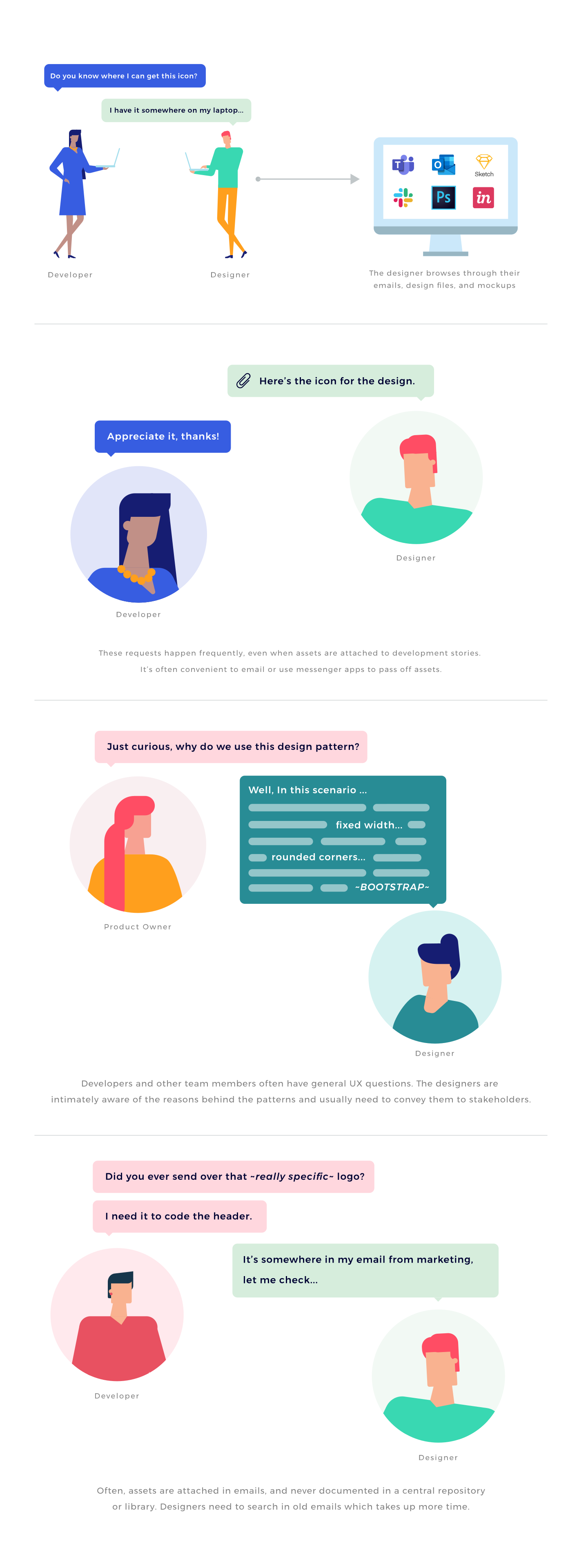
Before the change, most design knowledge lived in scattered conversations — Slack messages, email attachments, and one-off questions asked directly to a designer — assets and rationale that were easy to lose and hard to hand off to someone new.
Proposed Solution
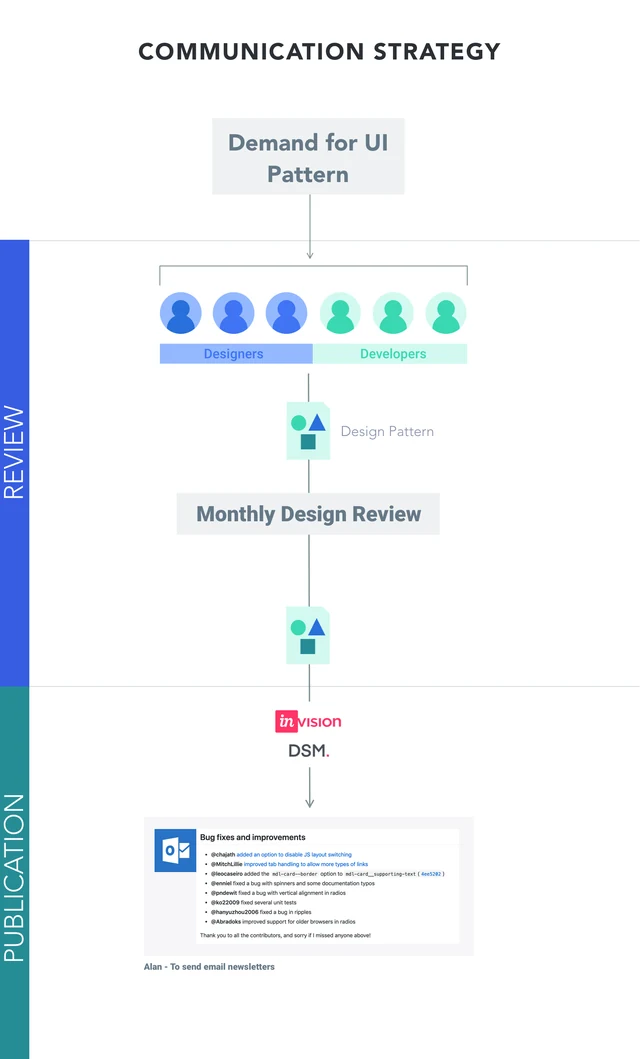
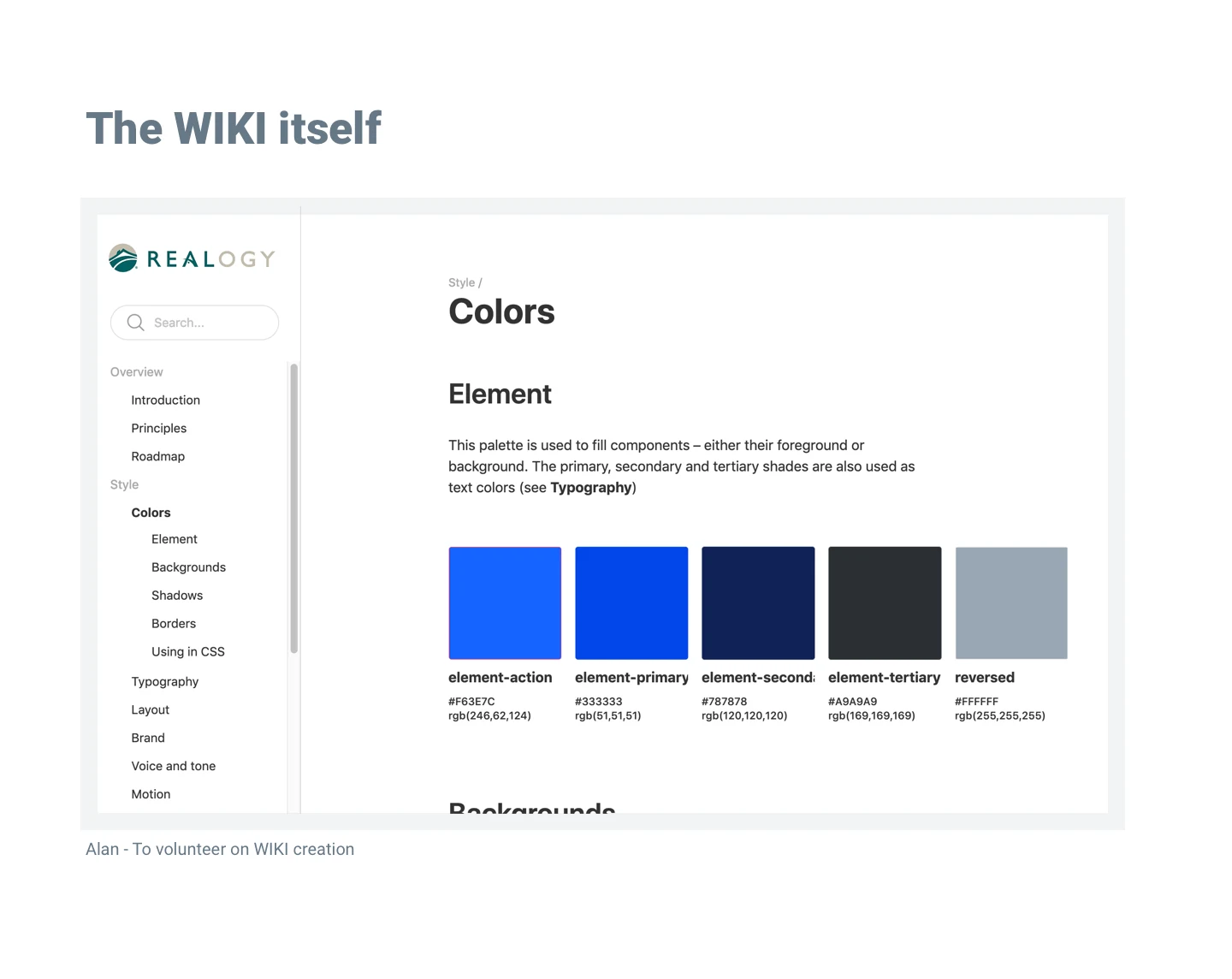
The solution was twofold: improve the communication process between designers & developers, and create a central repository for design assets and documentation. We needed a public monument (or Wiki) that team members could call the one “source of truth” for design patterns. With this approach, anyone can consult the Wiki for any general design-related questions and even find assets.
Follow-Up
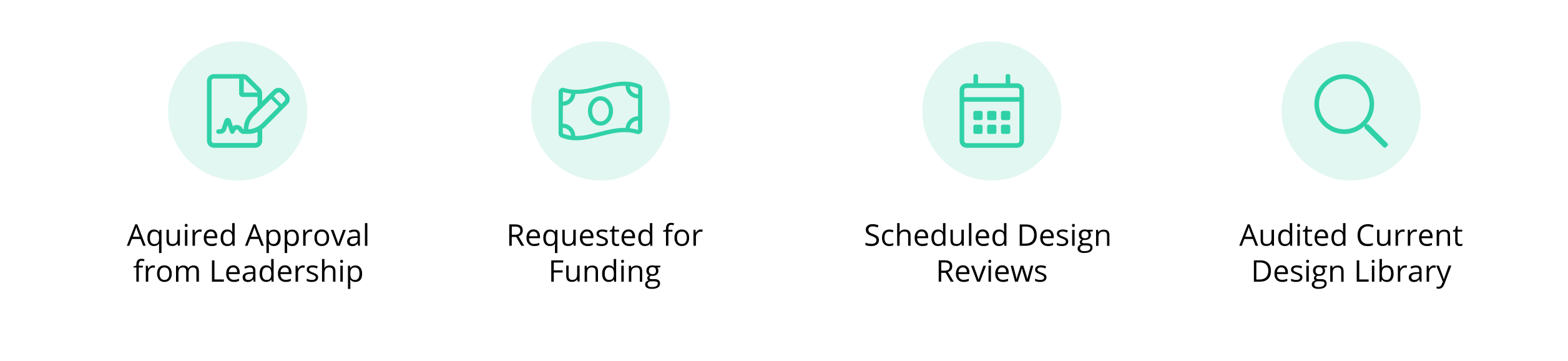
After I completed a competitive analysis of the tools available, I was able to get funding for this effort. I set up a Bi-Weekly review amongst designers and began auditing our library. The new process has helped designers sync their files and patterns efficiently as well as provided team members with a centralized source of truth for any design-related questions.
Audit and Presentation: Alan Gi
Illustrations: BoykoPictures
Credits